The “Dizionario storico-ragionato degli uomini illustri del Canton Ticino“, written by Gian Alfonso Oldelli, is a sort of encyclopedia of 1807 where Andrea Brilli is mentioned. It should be noted that all famous people (“uomini illustri”) mentioned in this encyclopedia were indeed, according to the author, exclusively men.
A quick search in the Internet concerning Andrea Brilli didn’t give much information on his personality, but Insubrica Historica has managed to find out that he served for the Russian Zarist Empire, particularly under Peter the Great and Empress Anna Ioanovna.
We decided to contact the Russlandschweizer-Archiv RSA (Russian-Swiss Archive) in Zürich in order to learn what was known about Andrea Brilli. Indeed, the archive had some information on him, albeit there were only few pages of a correspondence that dated to 1983 between Professor Carsten Goehrke and Mr. Luigi F.C. Naef of Lugano interested in Andrea Brilli.

For sure, Andrea Brilli was born in Cureglia near Lugano on 12 September 1682. His father was Carlo Simone Brilli married to Anna Maria Soroli; they both were from Cureglia. Andrea’s parents married in Cureglia on 24 January 1666. According to the Russian Biographic Dictionary of 1908, Andrea Brilli (in Russian: Andrej Brill or Andrej de Brill or in some sources even Andrej Brilly) had a military background gained in France, Sweden and Prussia. He was in Berlin in 1701 where he met the Russian Ambassador, Izmajlov.
Brilli accepted his proposition to serve for the Zarist Empire and went to Moscow where he had to pass a professional exam on his military skills before entering the service. The exam was delivered by a French officer named Lambert. Brilli passed the examen successfully so that he was promoted to the rank of captain in the Engineering Corp. Brilli’s previous military rank remains unknown, but most likely, he was ranking officer while serving the French, Swedish and Prussian armies.
Brilli managed to accomplish a brilliant military career in the Zarist Russia. In 1723, he was promoted to the rank of colonel. At the age of 43, he became a general in 1725. In 1731, he was then assigned to Eastern Ukraine where he was tasked to reorganise the militia of Malorossia.
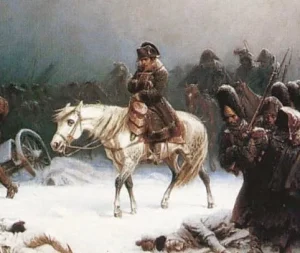
Ticinesi in Russia, 1812
An important chapter of Insubrica, which we have already mentioned in the past (see Mainoni butcher of Stans), is the Swiss army that fought for Napoleon's campaigns. It is an important chapter,…
The term Malorossia is formed originated from two Russian words: Malinki and Russia, meaning in English Little Russia. This term traced in fact its origin back to the medieval times and was widely used of that time as the name for a geographic territory that was much similar to our Insubrica region, meaning a vast territory but not referring particular to a single place. From the middle of the seventeenth century, the word Ukraine (in Russian: Ukrayina) was used sporadically, until it was reintroduced in the nineteenth century by the conscious effort of several writers who wanted to awake the Ukrainian national conscience. It was not until the twentieth century when the term “Ukraine” started to prevail substituting completely the term “Little Russia” that fell out of use.
During the period of 1736-1739, Brilli participated in several military campaigns against the Turks and Tatars, notably in the Russian armies of Count Burkhard Christoph von Münnich (1683 – 1767) and Count Peter von Lacy (aka Pyotr Petrovich Lacy (1678 – 1751).
In 1736, Brilli fought in the Don Army which took the key citadel of Azov and, next year, crossed the Syvash marshes into Crimea, where Russians were forced to fight against 15’000 men during two battles on 12 and 14 June. In 1738, Brilli won Crimea taking the fortress of Çufut Qale near the Khan’s capital, Bakhchisaray, defeating definitely (it would be more correct to write exterminating) the Tatars hordes out of Crimea.
Brilli left Crimea for Latvia, as he was apparently tasked to become a Governor of the city of Riga. The Swiss sources reported on this fact, however there has been no other trace that Brilli was ever a Governor of Riga. For sure, he was promoted in 1741 to a Lieutenant-General in Riga.
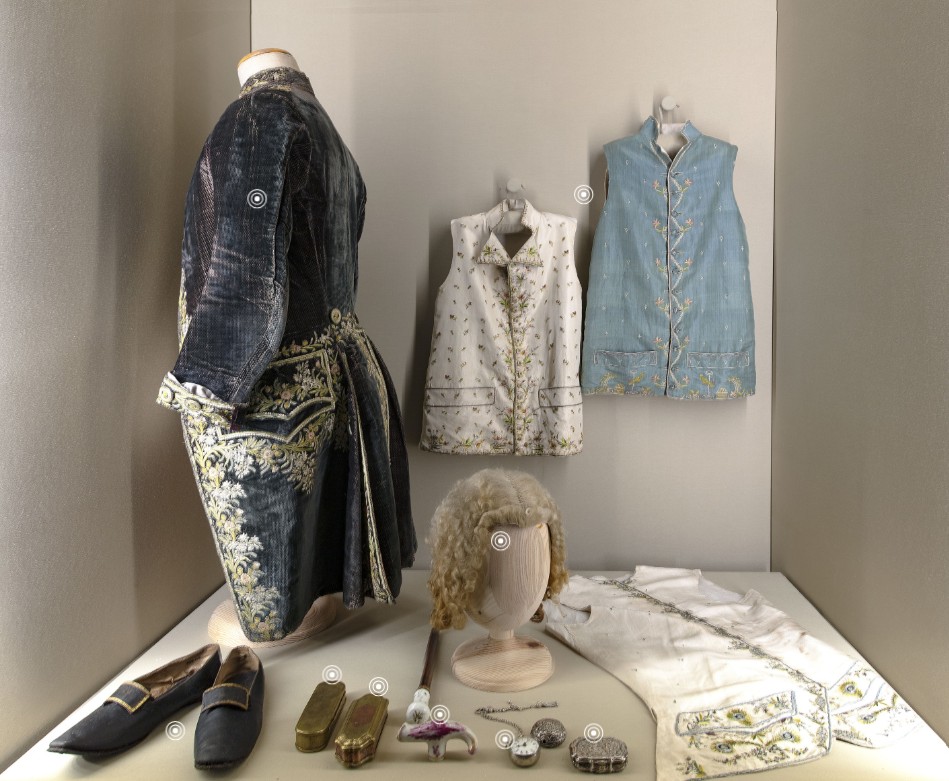
On 30 August 1744, Andrea Brilli was decorated with the Order of St. Alexander Nevskij, one of the most prestigious military honours in the Russian Tsarist Empire. The decoration recognised Brilli’s role with the army commanded by General von Lacy during the Russo-Swedish War of 1741-1743. Brilli took part in the attack of the Swedish city Villmanstrand (present-day Lappeenranta in Finland).
Brilli appears to have remained in Riga at least till 1751. That year, the Münchner Zeitung reported that he, together with Scottish General Maier Broune (most likely, General Browne) and German General Friderici, were seeking to leave the Russian Tsarist Empire for other assignments.
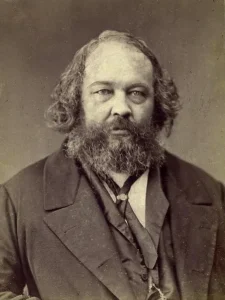
Mikhail Bakunin: Russian anarchist and antagonist of Karl Marx in Minusio Ticino
Google Maps view of Villa Baronata, Via San Gottardo 251 - 6648 Minusio Mikhail Alexandrovich Bakunin (1814 – 1876) was a Russian revolutionary anarchist and the founder of Collectivist Anarchism. He is…
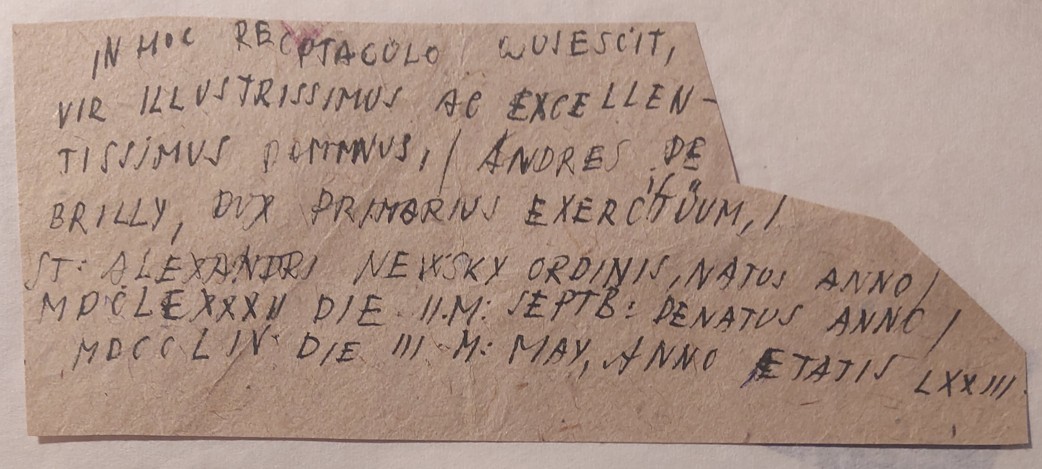
His final resting place and death date has recently been identified thanks to Valdis Abols, Editor at the Rundāle Palace Museum in Pilsrundāle, Latvia, who contacted us and helped solve the long-standing puzzle surrounding Brilli’s death. Andrea Brilli is buried in the crypt of the church of Skaistkalne (formerly Schönberg), located near Rundāle on the Latvian-Lithuanian border. He died in 1754. The inscription on his coffin gives his name as “Andres de Brilly,” but the birth date and the mention of the Order of Alexander Nevsky confirm his identity. It is not known whether Andrea Brilli was married or had children.
Sources:
- Gian Alfonso Oldelli, “Dizionario storico-ragionato degli uomini illustri del Canton Ticino” 1807
- For more information about Andrea Brilli serving for von Lacy, consult: “Contemporary Memoirs of Russia” written in 1856 by Cristof Hermann Manstein
- Valdis Abols, Editor at the Rundāle Palace Museum in Pilsrundāle, Latvia