Insubrica Historica’s exploration of the Lake Maggiore region extends beyond political events, military campaigns, and biographical narratives. Architecture, too, tells the story of a place — its aspirations, its ideologies, and its cultural currents. Buildings are silent witnesses to history, and understanding their design helps us comprehend the era in which they were conceived.
In this contribution, we turn our attention to rationalist architecture, a movement that flourished in Italy during the interwar period and left its mark — albeit very modestly — on the western shores of Lake Maggiore. While the nearby city of Como boasts renowned works by Giuseppe Terragni, the Verbano region offers a lesser-known but equally significant example: Palazzo Flaim in Verbania-Intra, designed by the Cannobio-born architect Luigi Vietti. Through this building, we examine not only an architectural style but also the complex relationship between art, politics, and identity in twentieth-century Italy.
There are few examples of rationalist architectural design on the western shore of Lake Maggiore. Unlike Como, which hosts several works by Giuseppe Terragni, the Verbano region offers only a handful of buildings in this distinctive architectural style.

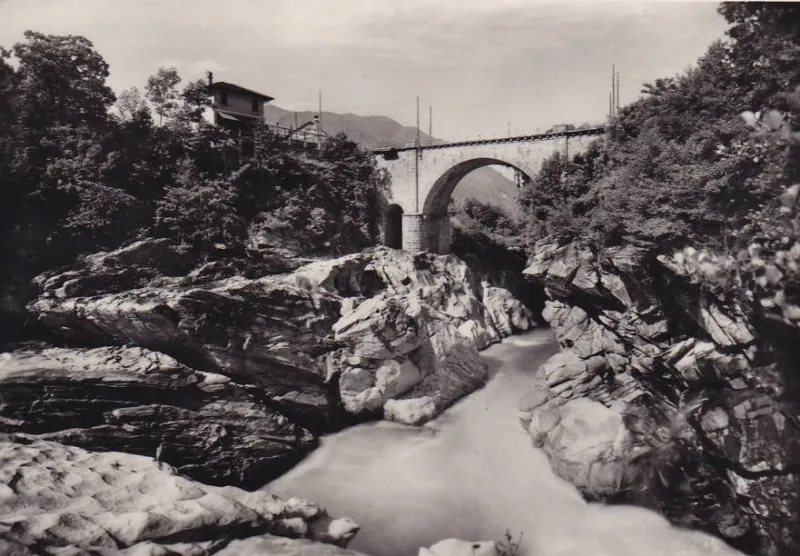
Examples of rationalist architecture in Italy. Copyright: scomunicando.it
The only example accessible to the public is a representative work conceived by Luigi Vietti (Cannobio 1903 – Milan 1998).
Located in Verbania-Intra, right on the lakeshore next to the ferry port, the building is now known as “Palazzo Flaim” and originally served as the Casa del Fascio under Benito Mussolini (Predappio 1883 – Giulino di Mezzegra 1945).
The Casa del Fascio typically housed the local branch of the National Fascist Party and later, between 1943 and 1945, the Republican Fascist Party. During the Repubblica Sociale Italiana (RSI), the building served as a military barracks for the Black Shirt brigade “Augusto Cristina.” The structure in Verbania was built between 1932 and 1935 according to a design by Luigi Vietti, whose career will be briefly outlined below.
Twentieth-century rationalism did not derive from a unified theoretical framework; rather, it emerged from a common belief that the varied problems posed by the real world could be resolved through reason. In this context, rationalist architects followed a philosophy rooted in René Descartes , emphasising geometric forms and ideal proportions. Rationalist architecture thrived in Italy from the 1920s to the 1940s and was influenced by the Deutscher Werkbund and Le Coubuisier. It was best represented by a group of young Italian architects: Carlo Enrico Rava (1903–1966), Sebastiano Larco (1901–?), Guido Frette, Adalberto Libera (1903–1963), Luigi Figini (1903–1984), Gino Pollini (1903–1991), and Giuseppe Terragni (1904–1943). Together they founded the so-called “Gruppo 7,” publishing their manifesto in the magazine Rassegna Italiana. Their intent was to strike a middle ground between the classicism of the Novecento Italiano movement and the industrially inspired architecture of Futurism.

Intervista Quotidiano RSI 19.10.2025 – Gli anni di piombo in Ticino
Il servizio televisivo del Quotidiano della RSI, andato in onda martedì 21 ottobre 2025, ha portato all'attenzione del pubblico ticinese le nuove scoperte emerse dalla ricerca di Raphael Rues, presentata solo due…
“Gruppo 7” was inspired by a spirito nuovo in architectural style, establishing a communicative basis with Mussolini’s vision of Fascism. The rationalist style brought about a revival of Italy’s classical heritage, connecting ancient Rome to modern times. However, the association with Fascist ideas and symbols largely stopped there. It would be reductive to consider rationalist architecture solely as a Fascist style, even though it was initially adopted as such. In fact, the rationalists distanced themselves from the regime, and their conceptions ultimately transcended both Fascist and Nazi ideologies.
Luigi Vietti was born in Cannobio. As a young architect, he designed many buildings used by Mussolini’s Fascist government as symbols of the political movement, including Palazzo Flaim, the Casa del Fascio in Rapallo, several other Case del Fascio in Liguria, and structures such as the Stazione Marittima Andrea Doria in Genoa. Vietti was a leading representative of the rationalist architectural style, yet also distinctly modernist in his interpretation of rationalism — he even designed furniture, including chairs.
Vietti survived the Second World War — unlike Giuseppe Terragni — and dedicated himself to the realisation of prestigious villas and residences. Many buildings in Cortina d’Ampezzo and throughout the Dolomites bear his signature, reflecting his pursuit of social representativeness and a harmonious relationship with the surrounding natural landscape.
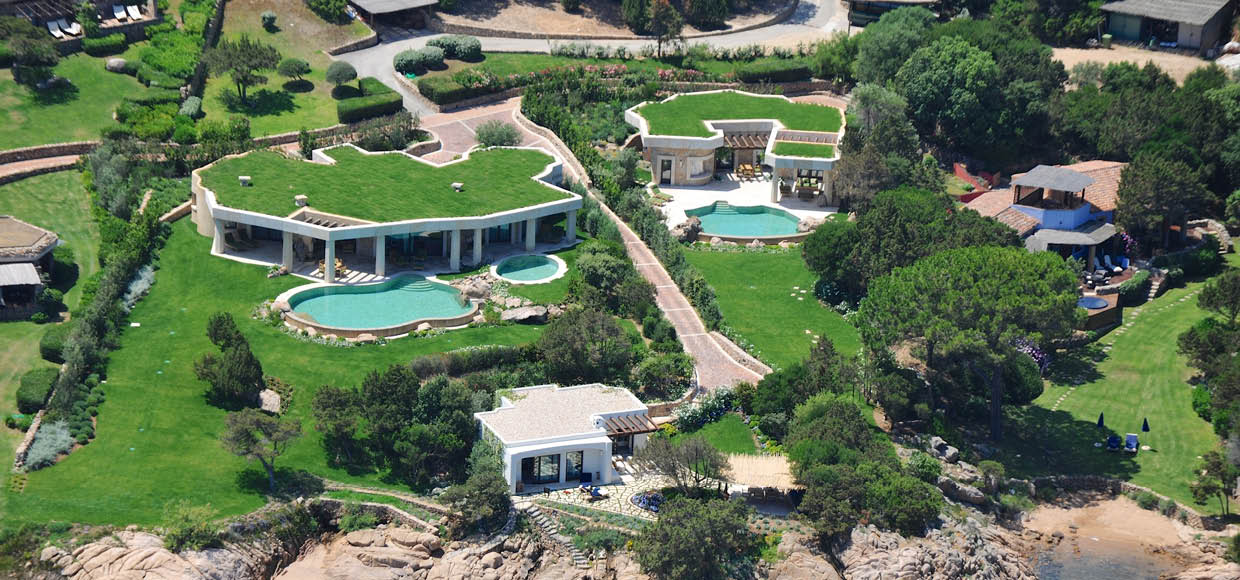
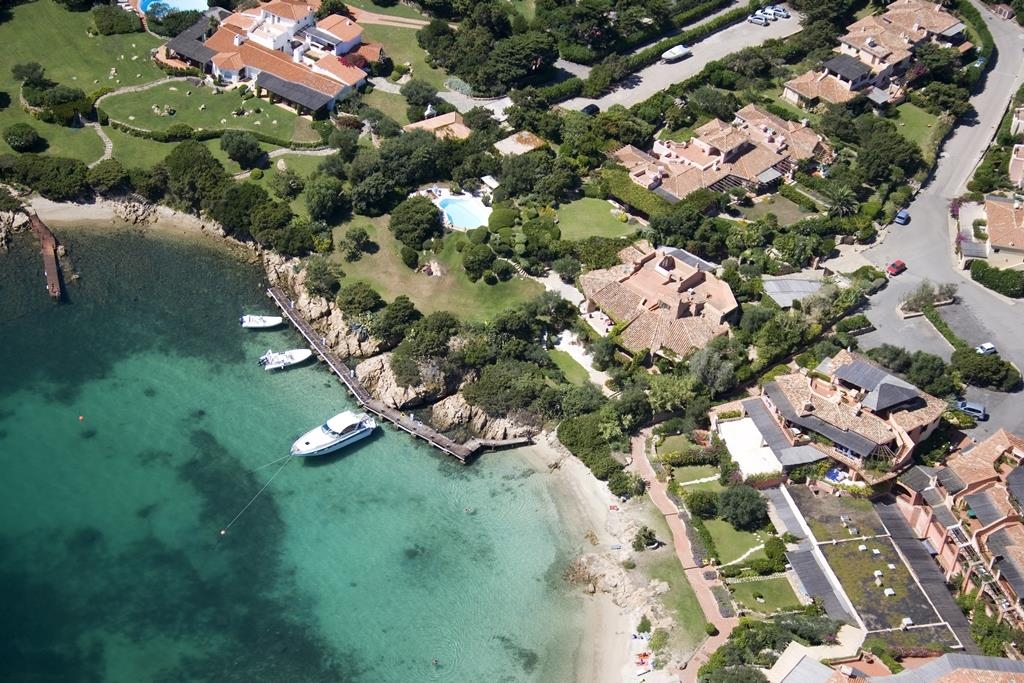
He later moved to Costa Smeralda in Sardinia, working for Prince Karim Aga Khan IV, who commissioned him to design numerous buildings. Transitioning from alpine to Mediterranean settings, Vietti designed center of the village of Porto Cervo and several hotels. Among his finest works are the Hotel Pitrizza, the Dolce Sposa complex, and many prestigious villas, including Villa Cerbiatte, chosen by Prince Karim as his private residence. Vietti died in Milan on 28 March 1998, at the age of 95.
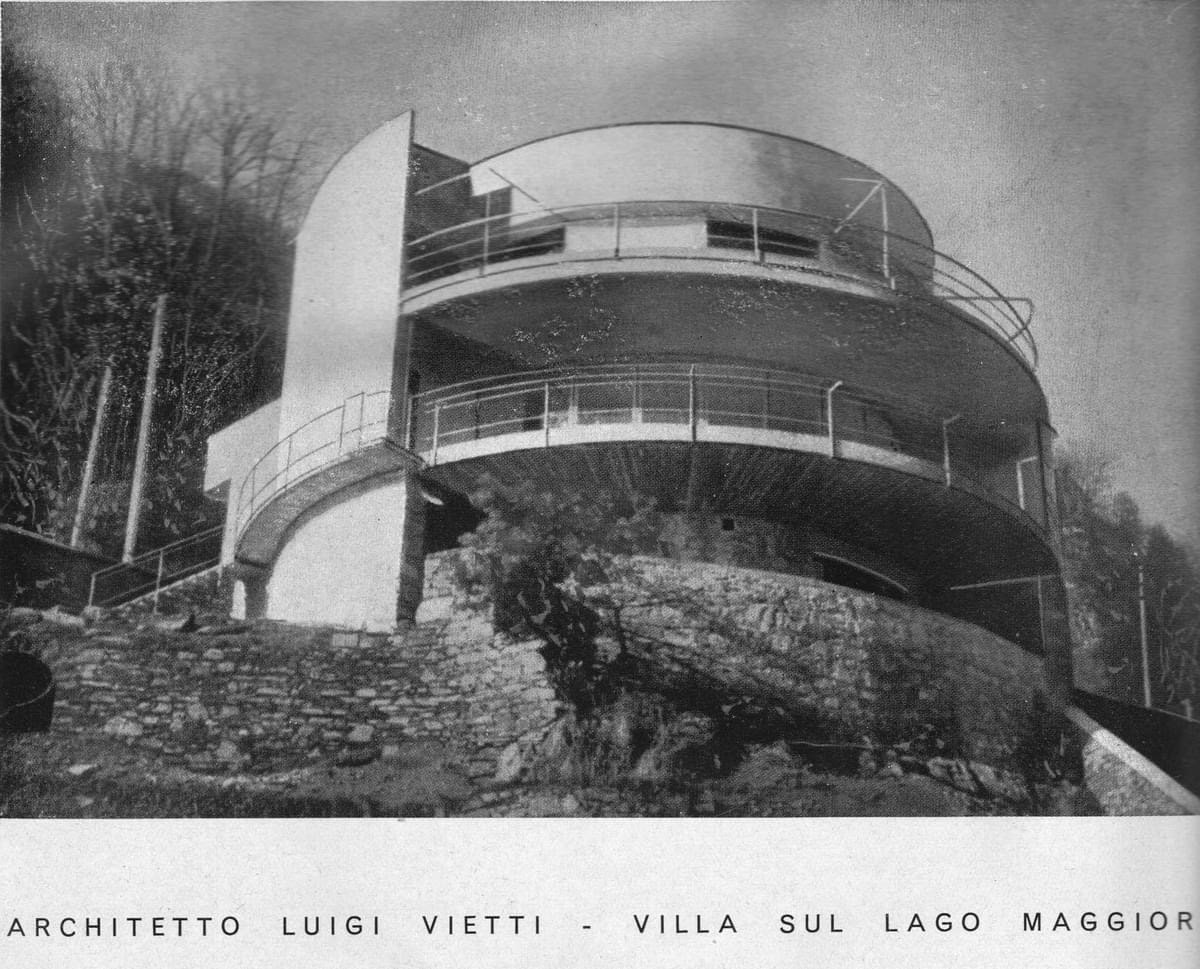
Luigi Vietti’s work in Verbania contributed significantly to the city’s urban landscape, leaving a magnificent imprint through his distinctive forms and proportions. One could see this, for example, in the now-demolished Teatro Sociale di Intra. Palazzo Flaim, however, remains: more than 80 years after its construction, the building still displays its monumental and scenographic character.
Supported by large columns, Palazzo Flaim was built with the aim of creating a spacious convention area, which occupies the first floor. The rear façade — facing north — has no windows, while the opposite side once featured a large fresco depicting Fascist imagery, now removed. Ribbed windows were installed on the side facing the port and the former tram line. Upstairs, a balcony overlooks the main hall, allowing natural light to flood the interior while minimising reflections. Outside, a tribune projects towards the city and its public; the backdrop is a pristine wall clad in lightly coloured marble slabs.
The building remains the subject of intense debate: some consider it an important example of Italian rationalism, comparable to certain works by Le Corbusier; others fail to appreciate its significance and dismiss it as a poor design; still others see it merely as a symbol of Fascism and nothing more.
Notes
Luigi Vietti’s Palazzo Flaim is not the only example of rationalism on the shores of Lake Maggiore. In Cannobio, at the southern entrance to the village — in an area called Punta Amore — stands another building designed by Vietti. This private residence, known as “Casa La Roccia,” is not accessible to the public but can be seen from the main road. It is positioned on a rocky promontory directly overlooking the lake.
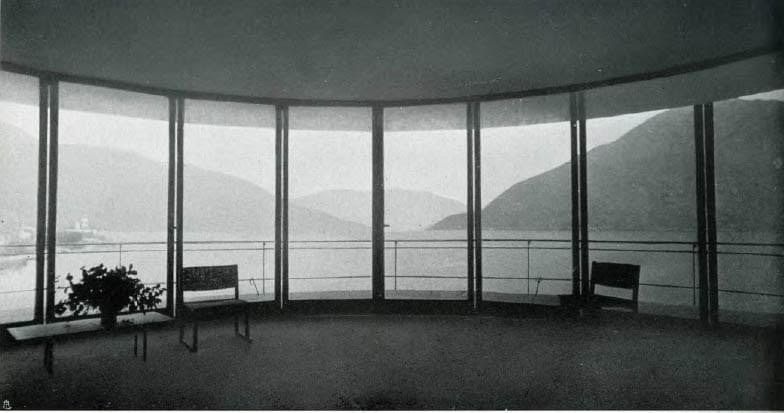
The particularity of this house by Vietti is that during the final stages of the Second World War, especially after the Italian armistice of 8 September 1943, it became a Fascist stronghold occupied by a border unit called Guardia Nazionale Repubblicana — Milizia Confinaria Battalion Monte Bianco.
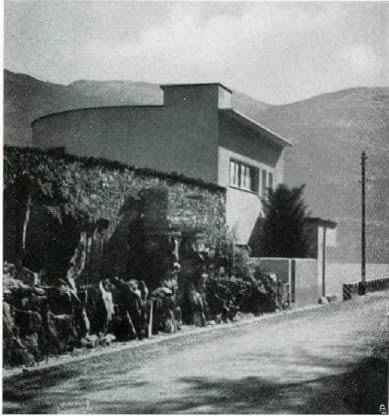
The house was most likely also occupied by Captain Mario Nisi, a war criminal active in Cannobio who, together with Major Angelo Martinez, was responsible for the massacre of eleven partisans above Cannero, in the locality of Trarego, only a few months before the end of the conflict.
The Fascist stronghold was not the only military presence in Cannobio; other premises were also requisitioned, such as the Hotel Cannobio, which was occupied between 1943 and 1945 by the German border police, the Zollgrenzschutz.
Visits
- Palazzo Flaim in Verbania
- Casa “La roccia” Cannobio, not accessible but can be seen from the main road
- For Giuseppe Terragni, visit in Como next to the soccer stadium the building Novocomun